The Labyrinth and the Light: Unpacking Synecdoche, New York's Core Truth
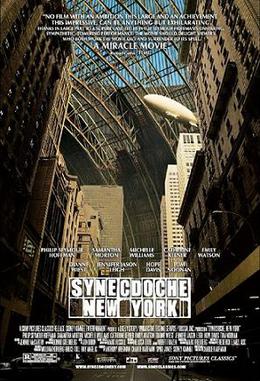
Synecdoche, New York stands as a towering, often enigmatic work in contemporary cinema, renowned for its complex narrative layers, existential themes, and the unforgettable performance by Philip Seymour Hoffman. At first glance, Charlie Kaufman's directorial debut can seem like an impenetrable puzzle, a sprawling depiction of life, art, and the inexorable march of time. Yet, beneath its intricate façade lies a surprisingly profound and accessible message: every single person we encounter is the protagonist of their own vibrant, complicated story, a lead character deserving of our attention and respect. This isn't just a clever meta-narrative trick; it's a deeply humanistic plea to see beyond ourselves and truly acknowledge the world around us.
The Life of Caden Cotard: A Masterclass in Wasted Potential
The film centers on Caden Cotard, a theater director haunted by hypochondria, artistic stagnation, and a pervasive sense of dread. Caden is, in many ways, an example of who *not* to be—a man so consumed by his own internal landscape that he struggles to connect genuinely with others. His life, as presented in
Synecdoche, New York, revolves around three pivotal components: his relationships, primarily with Hazel; his ambitious, ever-expanding play; and his relationship with himself. Tragically, each of these avenues of potential ends up down the drain, illustrating a heartbreaking theme of squandered time and missed opportunities.
Consider his relationship with Hazel, a woman with whom he shares a deep, albeit complicated, connection. They spend years orbiting each other, never quite aligning until it’s too late. Hazel's poignant lament, delivered shortly before her untimely death, encapsulates this tragedy perfectly: "I wish we had this when we were young. And all those years in between." It's a line that resonates with anyone who has ever regretted lost time or unexpressed feelings. Caden's inability to fully engage, his self-absorption, kept him from seizing happiness when it was within reach. This pervasive sense of regret and the corrosive effects of procrastination are central to the film's emotional core. For a deeper dive into this aspect, consider reading
Caden's Regrets: What Synecdoche, New York Teaches About Wasting Time.
Similarly, Caden's grand theatrical endeavor, a play meant to mirror his own life and the vastness of human experience, remains perpetually unfinished. He dedicates decades to its creation, constructing increasingly elaborate sets and casting actors to play himself, his wives, his lovers, and eventually, everyone in the city of New York. Yet, just as he "finally" knows how to stage it, after years of searching for an idea, he passes away. His breakthrough comes too late to be fully realized by him. Even his journey of self-discovery, during his time spent as Ellen, offers insight that is ultimately futile; it’s too late to apply the knowledge in any meaningful, personal way. Caden's story is a stark reminder of how our inward focus can blind us to the fleeting beauty and genuine connections waiting outside our self-imposed prisons.
The Play Within a Play: From Intellectual Breakthrough to Profound Revelation
Caden's monumental play, a sprawling, ever-expanding replica of reality, becomes the vehicle for the film's deepest insights. Initially, Caden strives for perfect verisimilitude, casting actors to mimic everyone in his life, including himself. Yet, the irony is that in his obsessive pursuit of a perfect representation of reality, he distances himself further from it. His attempts to control and categorize every aspect of existence within his play only serve to highlight his inability to truly live his own life.
The true turning point, the profound revelation that gives the film its enduring message, doesn't come directly from Caden's own actions. Instead, it emerges when he finally yields control of his production to Millicent, an actor initially cast to play Caden's daughter. Millicent, in her directorial capacity, makes a bold choice: she restages the funeral of Sammy, Caden's wife Adele's lover, but crucially removes Caden’s character from the scene altogether. This decision is more than just a creative choice; it’s a direct challenge to Caden’s self-centric view of the world.
It is in this re-staged funeral scene that Caden has his monumental, intellectual breakthrough, an idea he articulates but fails to truly embody: "I know how to do it, now. There are nearly 13 million people in the world. I mean, can you imagine that many people? And none of those people is an extra. They’re all leads in their own stories. They have to be given their due." This is the core truth the film wants us to grasp, a recognition that every single individual is a complex universe unto themselves, not merely a supporting player in our own narrative.
The Pastor's Sermon: Showing, Not Just Telling
The genius of
Synecdoche, New York lies not just in Caden stating this profound realization, but in the film's ability to *show* us this truth through Millicent's direction. In the re-staged funeral, a pastor, a character who has had no previous scenes, no build-up, no significant role in Caden's perceived narrative, steps forward to deliver one of the most powerful and emotionally resonant speeches in the entire film. This character is, by conventional screenwriting standards, an outlier, a true "extra." Yet, he commands the screen, delivering a monologue that feels deeply personal and universal.
This moment defies traditional storytelling rules, where significant emotional beats are typically reserved for established characters. But in
Synecdoche, New York, it works flawlessly because it directly proves Caden's own point: *every person is the lead in their own story*. The fact that this complete unknown, someone essentially a random passerby in Caden's sprawling epic, can deliver such a compelling and moving scene forces both Caden and the audience to wonder: what are all the other characters capable of? What depths of emotion, wisdom, and experience lie within every single person we casually dismiss as secondary to our own lives? It's a meta-commentary on how we perceive people, both in fiction and in reality.
Beyond the Screen: Embracing Every Lead in Their Story
The deepest message of
Synecdoche, New York extends far beyond the confines of Caden Cotard's fictional life. It's a call to greater empathy and presence in our own existence. If we are to heed the lessons of this challenging yet rewarding film, we must begin to truly look *at* people, rather than simply *through* them.
Here are some practical takeaways from the film's central theme:
*
Cultivate Active Listening: Don't just wait for your turn to speak. Engage with others' stories, perspectives, and experiences with genuine curiosity.
*
Challenge Your Assumptions: The person serving your coffee, the stranger on the bus, your seemingly quiet colleague—each one carries a world of joy, sorrow, dreams, and fears. Avoid reducing them to their roles or your initial impressions.
*
Value Small Interactions: Every brief encounter is an opportunity to acknowledge another "lead character." A simple smile, a moment of eye contact, or a kind word can affirm someone's presence.
*
Recognize Interconnectedness: Our lives are not solo acts. We are all supporting characters in countless other narratives, just as others are in ours. Understanding this fosters a sense of shared humanity.
*
Be Present in Your Own Story: Caden's biggest regret was wasting time. Don't let self-obsession or procrastination prevent you from experiencing your own life fully, and from being an active, engaged participant in the stories of those around you.
Ultimately,
Synecdoche, New York, with all its layers and complexities, boils down to a fundamental human truth. It implores us to recognize the infinite potential and inherent dignity in every soul, reminding us that no one is merely an extra. Everyone is the lead in their own irreplaceable story, and our world becomes richer, more empathetic, and more real when we open ourselves to acknowledging them. For a broader understanding of its thematic depth, explore
Synecdoche, New York Explained: Understanding Its Simple Core Message.
Conclusion
Synecdoche, New York is more than just a film; it’s an experience, a philosophical inquiry into what it means to be alive, to create, and to connect. While Caden Cotard's journey serves as a cautionary tale of isolation and self-absorption, it ultimately delivers a profound message of universal significance: every person holds a universe within them, a story as rich and complex as our own. By learning to see the "lead" in every individual, we not only enrich their lives but also expand our own understanding of existence, transforming the seemingly chaotic tapestry of life into a symphony of countless, equally vital narratives.